A Sheep’s Journey Through Psalms – 10

Devotional on Psalm 10: A Cry for Justice, A Call to Trust
Scripture Reading: Psalm 10 (ESV)

Why, Lord, do you stand far off? Why do you hide yourself in times of trouble? In his arrogance the wicked man hunts down the weak, are caught in the schemes he devises. He boasts about the cravings of his heart; he blesses the greedy and reviles the Lord. In his pride the wicked man does not seek him; in all his thoughts there is no room for God. His ways are always prosperous; your laws are rejected by[b] him; he sneers at all his enemies. He says to himself, “Nothing will ever shake me.” He swears, “No one will ever do me harm.” His mouth is full of lies and threats; trouble and evil are under his tongue. He lies in wait near the villages; from ambush he murders the innocent. His eyes watch in secret for his victims; like a lion in cover he lies in wait. He lies in wait to catch the helpless; he catches the helpless and drags them off in his net. His victims are crushed, they collapse; they fall under his strength.  He says to himself, “God will never notice; he covers his face and never sees.” 12 Arise, Lord! Lift up your hand, O God. Do not forget the helpless. 13 Why does the wicked man revile God? Why does he say to himself, “He won’t call me to account”? 14 But you, God, see the trouble of the afflicted; you consider their grief and take it in hand. The victims commit themselves to you; you are the helper of the fatherless. Break the arm of the wicked man; call the evildoer to account for his wickedness that would not otherwise be found out. 16 The Lord is King for ever and ever; the nations will perish from his land. 17 You, Lord, hear the desire of the afflicted; you encourage them, and you listen to their cry, 18 defending the fatherless and the oppressed, so that mere earthly mortals will never again strike terror.

Reflection: The Heart’s Cry in a Broken World
Psalm 10 is a raw, honest lament, a cry from the psalmist’s heart as he observes the rampant injustice in the world around him. The wicked prosper, the poor are oppressed, and it seems as though God is distant, silent, or even hidden. This psalm, attributed to David in the Septuagint tradition, resonates with the struggles of God’s people across centuries—whether in ancient Israel, the early church, or today. From a historical Christian perspective, Psalm 10 invites us to wrestle with the tension between God’s apparent absence and His unchanging faithfulness, a theme echoed by church fathers, reformers, and saints through the ages.
The psalm begins with a question that feels timeless: “Why, O Lord, do you stand far off?” (v. 1). Early Christian thinkers like Augustine saw in this cry a reflection of the human soul’s longing for God amid suffering. Augustine, in his Expositions on the Psalms, reminds us that God is never truly absent, even when He seems hidden. The psalmist’s bold questioning models a faith that dares to bring its doubts to God, trusting Him enough to voice frustration. This honesty is a hallmark of Christian devotion, from the desert fathers who prayed in solitude to the Puritans who sought God’s justice in a world of corruption.
As the psalm describes the arrogance of the wicked—those who “boast of the desires of their heart” (v. 3) and “say in their heart, ‘God has forgotten’” (v. 11)—we see a portrait of human pride that defies God’s authority. The early church faced such opposition in the Roman Empire, where Christians were persecuted by those who mocked their faith. Yet, leaders like Tertullian and Ignatius of Antioch found hope in passages like Psalm 10:12–15, where the psalmist pleads, “Arise, O Lord; O God, lift up your hand!” They believed that God sees the afflicted, hears their cries, and will ultimately bring justice. This conviction sustained martyrs and fueled the church’s perseverance.
The psalm’s closing assurance, “The Lord is king forever and ever” (v. 16), anchors its hope in God’s eternal reign. Medieval theologians like Thomas Aquinas emphasized God’s sovereignty as the foundation of Christian hope, even when earthly powers seem to triumph. The Reformers, such as John Calvin, echoed this, teaching that God’s delay in acting is not indifference but a call to trust His perfect timing. Calvin, in his commentary on the Psalms, noted that God’s “hiding” is a test of faith, refining believers to rely on His promises rather than their circumstances.


Application: Trusting God in the Waiting

Psalm 10 speaks to us today as it did to Christians centuries ago. When we see injustice—whether systemic oppression, personal betrayal, or the flourishing of the wicked—it’s natural to echo the psalmist’s cry: “Why, O Lord?” Yet, the historical Christian witness reminds us that God is not aloof. The cross of Christ, the ultimate answer to human suffering, reveals a God who enters our pain and triumphs over it. As the early church father Chrysostom wrote, Christ’s resurrection assures us that God’s justice will prevail, even if we must wait for it.
In your own life, where do you feel God seems distant? Bring your questions to Him, as the psalmist did, with bold faith. Trust that He sees the afflicted, hears your prayers, and will act in His perfect time. Like the saints of old, let Psalm 10 inspire you to persevere, knowing that “the Lord hears the desire of the afflicted” (v. 17) and will one day set all things right.


Prayer:
Heavenly Father, in a world marred by injustice, we often feel the weight of the psalmist’s cry: “Why do you hide yourself?” Yet, we trust that You are the King forever, seeing the oppressed and hearing our prayers. Strengthen our faith to wait on Your justice and to live as Your witnesses, proclaiming Your love and righteousness. Through Christ, our Savior, we pray. Amen.


For Further Reflection:
• Read Psalm 10 alongside Romans 8:18–25 to see how the New Testament fulfills the psalmist’s hope.
• Consider the writings of Augustine or Calvin on the Psalms for deeper insight into God’s sovereignty and human suffering.
• Reflect on a current injustice in your life or the world. How can you trust God’s timing while actively seeking His kingdom? 
Does God Really Delight In Us?

The question of whether God delights in humanity is both profound and deeply personal, touching on the nature of Divine love, human worth, and the relationship between Creator and creation. Within Christianity, various theological traditions offer nuanced perspectives on God’s delight in us. Today, I would like to show how both conservative and reformed Christians answer the title question. By synthesizing their viewpoints, a cohesive understanding of God’s delight in us can be found.

Conservative Christians are often characterized by their high view of Scripture and an emphasis on a personal relationship with God. which leads them to affirm that God delights in His people. This perspective draws heavily from biblical passages that depict God’s love and affection for humanity. Zephaniah 3:7 states, “The Lord your God is with you, the Mighty Warrior who saves. He will take great delight in you; in His love He will no longer rebuke you, but will rejoice over you with singing.” This verse paints a vivid picture of a God who not only loves, but also rejoices over His people with emotional warmth.

Passages similar to the above are often cited as evidence of God’s personal and relational nature. They emphasize that God created humans in His image (Genesis 1:26-27), endowing them with inherent worth and dignity. Even after the Fall, God’s pursuit of humanity through the covenants, the giving of the Law, and ultimately the incarnation of Jesus Christ demonstrates His desire for relationship. The New Testament reinforces this with verses like John 3:16 which underscores God’s love as the motivation for sending His Son.

In the conservative Christian view, God’s delight is particularly evident in the redeemed — those who have accepted Christ’s atoning sacrifice. This view points to verses like Psalm 147:11, “The Lord delights in those who fear Him, who put their hope in His unfailing love.”, to argue that God takes pleasure in the faith and obedience of His followers. However, this delight is not based on human merit but on God’s gracious choice to love and redeem sinners. The conservative perspective thus balances God’s holiness with His relational affection, affirming that believers are cherished by a God who is both just and loving.

The Reformed tradition approaches the question of God’s delight through the lens of Divine sovereignty and election — God’s eternal decree to save a particular people for His glory. While the language of “delight” may be less emotive in the Reformed discussion, the concept is present, framed within the doctrine of God’s good pleasure.

In this view, God’s delight in humanity is primarily tied to His elect, those chosen before the foundation of the world for salvation (Ephesians 1:4-5). This delight is not based on human worthiness, as humanity is totally depraved and incapable of earning God’s favor (Romans 3:10-12). Instead, God’s delight flows from His sovereign will to glorify Himself through the redemption of sinners. As Ephesians 1:5-6 notes, God predestined believers “for adoption to sonship through Jesus Christ, in accordance with His pleasure and will – to the praise of His glorious grace.” Other passages such as Isaiah 62:4-5 are pointed at where God’s relationship with His people is likened to a bridegroom rejoicing over his bride, to affirm that God takes pleasure in His covenant people. However, this delight is understood within the context of God’s immutable nature. Unlike human emotions, which fluctuate, God’s delight is eternal and unchanging, rooted in His decision to love on His people (Deuteronomy 7:7-8) This viewpoint also underscores that God’s delight is ultimately Christ-centered. Believers are accepted “in the Beloved” (Ephesians 1:6) meaning God’s pleasure in His people is mediated through their union with Christ. Because Christ is the object of the Father’s supreme delight (Matthew 3:17) those who are in Christ share in this Divine favor. God’s delight, then, is not contingent on human performance, but on the finished work of Christ.

While these two viewpoints differ in emphasis, they converge on several key truths:

  1. God’s delight is rooted in His nature Both perspectives affirm that God’s delight flows from His character as a loving and gracious God. Conservatives emphasize the emotional and relational aspects of this delight while the Reformed highlight its sovereignty and eternal nature. Together these views present a God who is both deeply personal and supremely authoritative, delighting in His people because of who He is.
  2. Humanity’s worth is derived from God. Both traditions agree that human beings have no inherent merit to earn God’s delight. Conservatives stress the Imago Dei and God’s redemptive love while the Reformed underscore humanity’s total depravity and election. Together they show that God’s delight is an act of grace, not a response to human achievement.
  3. Christ is central to God’s delight. Both viewpoints center God’s delight in the person and work of Jesus Christ. Conservative highlight the relational restoration made possible through Christ’s sacrifice while Reformed theology emphasizes union with Christ as the basis for Divine favor. Together they show that God’s love is not a vague sentiment, but a concrete reality grounded in truth.
  4. God’s delight calls for response Both see God’s delight as transformative. Conservatives often frame this as a call to personal obedience and faith, encouraging believers to live in light of God’s love. Reformers emphasize the perseverance of the saints, viewing God’s delight as a motivator for holiness and worship. Together they inspire believers to respond with gratitude, trust, and devotion.

Some final notes. Conservative Christians run the risk of anthropomorphizing God when emphasizing His relational warmth. Reformed Christians run the opposite risk, downplaying the emotional richness of God’s love. A synthesis mitigates this by presenting a more balanced view of God, who is both sovereign and relational, eternal and intimate.

The question “Does God really delight in us?” finds a resounding YES in both traditions. Together, they proclaim a God who delights in His people not because of their worthiness but because of His gracious choice, manifested by the redeeming work of Christ. This truth is both humbling and exhilarating. It calls us to rest in God’s unchanging love, to live in gratitude for His grace, and to worship the One who rejoices over us with singing.

Grief and the Christian Faith

Grief is an inescapable reality in a fallen world. The sting of loss — whether through broken relationships, death or shattered dreams — cuts deeply into the human soul. Yet, for the Christian, grief is not a solitary or hopeless journey. It is a journey walked under the sovereign hand of God, illuminated by the promises of Scripture< and sustained by the hope of Christ’s victory over sin and death.

The Bible does not shy away from the rawness of grief. From the anguished cries of Job (Job 3:11) to David’s lament over his fallen son (2 Samuel 18:33), Scripture acknowledges that sorrow is a natural response to loss. The Christian perspective begins with the foundational truth of the Fall: sin has fractured God’s good creation, bringing death and decay into the world (Genesis 3:17-19, Romans 5:12). Grief, then, 7is not an anomaly but a consequence of living in a world marred by sin. It is a reminder that things are not as they were meant to be.

Yet, this recognition does not leave us in despair. The Christian faith emphasizes that even in this brokenness, God remains sovereign. Nothing, not even the deepest pain, falls outside His Divine Purpose. In grief, we are invited to trust that God is working, even when His ways are inscrutable.

For the believer in Christ, grief is not borne alone. Psalm 34:18 assures us, “The Lord is near to the brokenhearted and saves the crushed in spirit.” This promise anchors the Christian’s understanding of suffering: God does not abandon His people in their sorrow but draws near to them. Jesus Himself, the Man of Sorrows (Isaiah 53:3) entered into human suffering, wept at the tomb of Lazarus (John 11:35) and bore our griefs on the cross (Isaish 53:4). In Christ, we find a High Priest who sympathizes with our weakness (Hebrews 4:15), offering comfort that is both divine and deeply personal.

Christian theology underscores that this comfort is not mere sentiment, but a reality rooted in God’s covenant faithfulness. He has promised never to leave or forsake his people (Deuteronomy 31:6, Hebrews 13:5). Even in the darkest valley, the Christian can echo David’s confidence: “You are with me; Your rod and Your staff, they comfort me” (Psalm 23:4).

While grief is real, it is not the final word. The Christian faith clings tenaciously to the hope of the resurrection and the making of a new Earth where death, sorrow and suffering will be no more. Paul writes in 1 Thessalonians 4:13 that believers “do not grieve as others who have no hope.” This does not mean that Christians avoid tears or suppress sorrow — Jesus Himself wept — but that their grief is tempered by the certainty of Christ’s triumph over death. Because Jesus rose from the grave, those who are united to Him by faith will also rise (1 Corinthians 15:20-22). Death has been defeated, and the day is coming when “He will wipe away every tear from their eyes” (Revelation 21:4) when the new heavens and earth are created for us.

This hope reshapes how we mourn. Loss is temporary; reunion is eternal. For the Christian, grieving is an act of waiting — waiting until the fulfillment of God’s promises will come to pass. The promises of removing the curse of sin and restoring creation to how it should be.

Grieving as a Christian involves both lament and trust. Lament is not a sign of weak faith, but a biblical response to pain. The Psalms are filled with cries of anguish – “How long O Lord?” (Psalm 13:1) – that model honest wrestling before God. We are free to pour out our hearts, knowing that He hears and cares. At the same time, trust in God’s sovereignty and goodness steadies us. Romans 8:28 assures us that “for those who love God all things work together for good.” This does not erase pain but reframes it within God’s redemptive plan.

Practically this might mean weeping over a loved one’s death while clinging to the promise of eternal life. It might mean wrestling with unanswered questions while resting in the truth that God’s wisdom surpasses our own (Isaiah 55:8-9). It is a posture of humility, acknowledging our limits and God’s infinite goodness.

Finally, the Christian faith emphasizes that grief is not meant to be endured alone. The church, as the body of Christ, is called to “weep with those who weep (Romans 12:15). Fellowship with other believers provides tangible support – prayers, meals or simply a listening ear. Moreover, God has given us the means of grace – Scripture, prayer and the sacraments – to sustain us in sorrow. The Word reminds us of God’s promises, prayer draws us into His presence, and Communion offers a foretaste of the heavenly banquet where all tears will cease.

Grieving as a Christian is a paradox. It is sorrow mingled with hope; lament tempered by trust. We mourn deeply because we love deeply, yet we lift our eyes to the One who hold all things in His hands. In the end, our grief is not the end. Christ is risen, God is Sovereign, and the day of restoration draws near. Until then, we grieve as those who belong to Him, resting in His unfailing love and looking forward to the dawn when mourning will give way to everlasting joy.

The Shortened Arm

In Isaiah 59:1, Scripture records these words, “Behold, the LORD’S hand is not so short That it cannot save; Nor is His ear so dull That it cannot hear.” (NASB) Why, then, is God treated by so many people as well-meaning in His desire to save individuals but impotent to actually do so? Is God’s arm actually shorter than the prophet Isaiah thought it was? It irks me to no end to hear sloppy preaching that says, “God has done all He can do, now it is up to you to be saved. You must take that final step on your own.” As if God is helplessly standing by watching millions of people slide into outer darkness because they will not take that step and He cannot reach out to them. That is not what Isaiah 59 says! If you go on to read the chapter you see a picture of man’s descent into sin and his impotence to help himself. The verses talk about how we fell so far that we hope for salvation (11) but are unable to bring it about. Then, because we cannot save ourselves, God’s own arm (16) brought salvation.

Jesus was sent to save His people from their sins. His very name reflects this truth. All the Father gave Him, He redeemed. He did not and cannot fail to save those the Father has elected to be adopted into His family. As has been written many times before on this site, God is Sovereign over the affairs of men and Jesus is both willing and able to save those whom He chooses to save.

I also get tired of preachers spouting, “The Holy Spirit is a gentleman, He will never force you to do anything you do not want to do.” Really? Where do they find that in Scripture? Must be from one of those “lite” versions of the Bible. Mine describes Him as  a counselor, a rebuker, a teacher, a convicter, a judge, an exhorter, an enabler, a baptizer, and a consuming fire but nowhere in Scripture does it say that the Holy Spirit is a gentleman. Certainly Saul of Tarsus was rudely interrupted on his way to Damascus to merrily kill more Christians. Scripture records Ananias being told that Saul would be taught what things He would suffer for Jesus’ sake. Hardly a gentlemanly way of dealing with someone, and this after being blinded. The Holy Spirit is likened to a wind – it rushes, catches, carries and moves us. It caught up Phillip and deposited him miles away from the Ethiopian eunuch, it swept up Elijah and blew as tongues of fire at Pentecost. Yes, a gentle zephyr is wind also but God works in many ways. Sometimes He does deal gently with us but sometimes He moves violently, swiftly, surely. There are times when God does force people to do certain things. He gives commands – Repent or perish. That is hardly a gentlemanly statement. He whips merchants from the Temple and calls people names. God sends a storm to stop Jonah from going on his merry way and keeps Paul from entering Bithynia. God is sovereign over His creation.

Sovereignty is such a frightening concept to those under the illusion that they are in charge of their little piece of the universe. Instead of seeing sovereignty as a doctrine of complete comfort, allowing us to rest in the hands and plans of a good God who knows what is best for us at all times; instead of seeing sovereignty as God loving us so much He actively keeps us from destroying ourselves, those who undermine this great doctrine do so because of a false notion that they are in charge of their own life. If God is, as Scripture states, sovereign over the affairs of men, don’t you see that this includes their salvation?

I serve a God whose arm was long enough and strong enough to reach down and save me when I was yet unaware of my condition. It was He who awoke my spirit to life, He who gave me spiritual sight to behold His glory, He who gave me faith to believe the promises He told to me, He who granted to me grace, mercy and forgiveness and He who sealed my spirit with His forevermore. Praise be to the God with long arms — great things He has done!

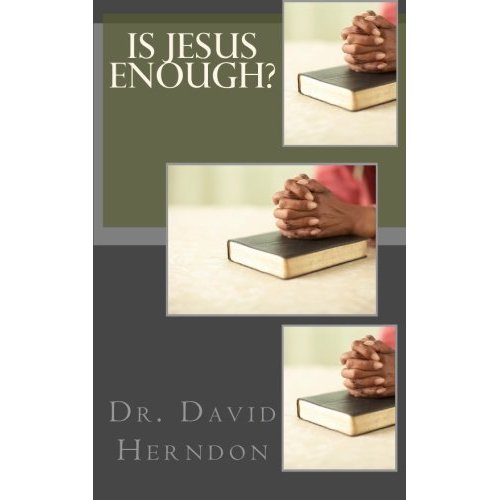
Free Resource – Is Jesus Enough? for Kindle

Today through Sunday we are offering our book Is Jesus Enough? free for the Kindle or Kindle for PC.

http://www.amazon.com/Is-Jesus-Enough-ebook/dp/B004GNFHVY/ref=sr_1_2?ie=UTF8&qid=1349475169&sr=8-2&keywords=is+jesus+enough

This book has sold thousands worldwide and is available in print both in English and Chinese. For this special weekend, we are offering the English Kindle version free.

If you do not have the free Kindle for PC app, please go here: http://www.amazon.com/gp/feature.html/ref=kcp_pc_mkt_lnd?docId=1000426311